
grid-demand-is-rising-how-bardeen-helps-turn-transformer-requirements-into-a-buildable-delivery-plan, grid-demand-is-rising-how-bardeen-helps-turn-transformer-requirements-into-a-buildable-delivery-plan, /news
2026/09/07
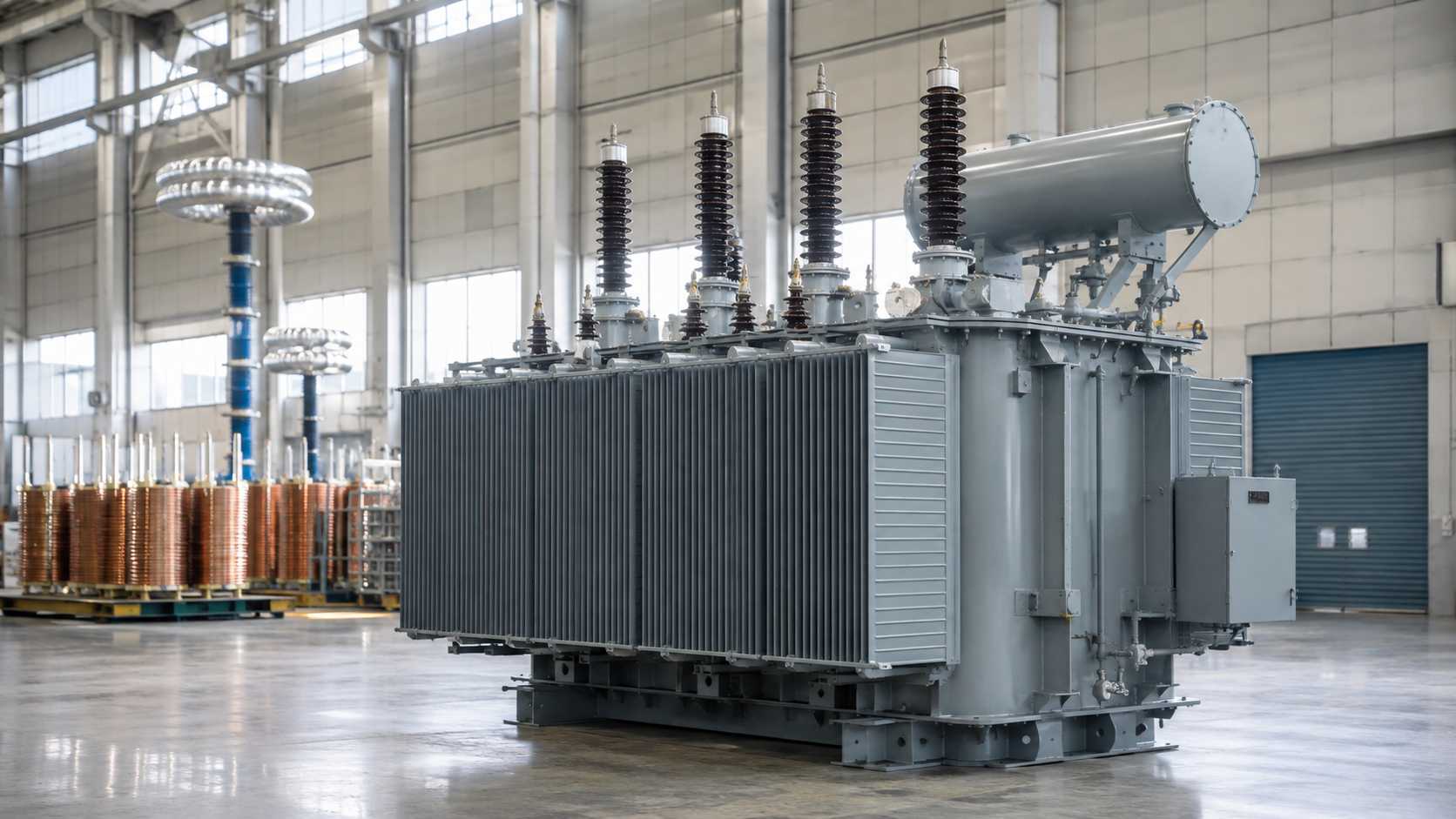
Recent grid-demand data is a useful reminder that transformer procurement is not only about selecting a voltage and power rating. A successful project also depends on clear technical inputs, a controlled design process, manufacturing checkpoints, agreed factory tests and complete delivery documents. Bardeen helps customers organize these steps from the beginning. The process starts with the customer's single-line diagram, load information, installation environment and applicable standards. It then moves through technical clarification, design confirmation, production planning, inspection, testing and shipment preparation. This article explains what customers should provide, what Bardeen can return at each stage and how a structured workflow reduces avoidable questions during procurement. The goal is practical: help utilities, EPC contractors, industrial users and infrastructure developers turn an initial requirement into a transformer package that is easier to review, manufacture, test, install and maintain.
On September 3, 2026, the US Energy Information Administration reported that average hourly electricity load in ERCOT reached 74.5 GW for the week ending August 22, a new weekly record, and remained close to that level at 73.7 GW for the week ending August 29. The data reflects conditions in one power market, not a universal global trend, but it illustrates a challenge that many project teams recognize: when electricity demand is high and connection schedules are important, electrical equipment decisions need to be made with greater discipline.
For a utility, data center, factory, renewable-energy project or commercial development, the transformer is a long-life engineered asset. A purchase cannot be defined by rated power and voltage alone. The customer also needs to consider the load profile, impedance, insulation level, loss evaluation, cooling arrangement, tapping requirements, installation altitude, ambient temperature, short-circuit conditions, accessories, monitoring, noise, enclosure, transport limits and the standard required by the project.
Bardeen's role is to help convert those inputs into a clear technical and production package. This does not remove the customer's responsibility to approve the design or select the applicable project standard. It gives the customer a structured way to move from an early inquiry to a specification that can be reviewed, manufactured and tested.
Many transformer inquiries begin with only three numbers: primary voltage, secondary voltage and kVA or MVA rating. Those numbers are necessary, but they are not enough for a reliable quotation. Missing details usually return later as clarification questions, drawing revisions or changes in accessories.
To reduce that back-and-forth, Bardeen can review the information already available and identify the details still needed. A useful starting package normally includes:
If the customer does not yet have a complete specification, Bardeen can organize the known requirements into a clarification list. The customer and its consultant or EPC can then confirm each open item before design release. This is more useful than filling gaps with assumptions that may not match the actual system.
Different applications place different demands on a transformer. A unit serving a steady industrial process may have a different duty profile from one serving a data center, solar plant, wind project, mining operation or distribution network. Harmonics, motor starting, cyclic loading, enclosure restrictions and future expansion can all affect the final specification.
During technical review, Bardeen can help the customer compare the requested parameters with an appropriate transformer configuration. Depending on the project, the discussion may cover oil-immersed or dry-type construction, conductor and insulation choices, cooling, off-circuit or on-load tapping, cable boxes, bushings, protection devices, monitoring instruments and installation layout.
The result should be a project-specific datasheet and drawing package rather than a generic catalog description. The customer should be able to see what is included, what is optional and which points still require approval. When the buyer supplies its own drawings or technical schedule, Bardeen can review them and prepare a response showing compliance, deviations and questions. When the requirement is less developed, Bardeen can work from functional inputs and submit a proposed configuration for customer review.
No manufacturer should select the owner's system requirements without approval. The value of engineering support is to make decisions visible early, while changes can still be evaluated on paper.
A controlled production plan starts with an approved technical baseline. Before material preparation and assembly, the key documents should be aligned: datasheet, outline drawing, terminal arrangement, accessory list, nameplate information, applicable standard, test schedule and document-submission plan.
Bardeen can use this design-confirmation stage to connect customer comments with the production team. If a requested change affects dimensions, losses, impedance, cooling, accessories or delivery, the impact can be identified before the change reaches the shop floor. The customer receives a clearer record of which revision is approved for manufacture.
This stage is especially helpful when several parties are involved. An EPC may manage the commercial order, a consultant may review calculations, the end user may approve the interface and a logistics provider may define transport limits. A single agreed document register helps all parties work from the same revision.
Transformer quality is built through a sequence of controlled operations rather than inspected only at the end. Production activities can include incoming-material checks, core preparation, winding manufacture, insulation processing, active-part assembly, tank and accessory installation, drying, oil processing where applicable, final assembly and pre-test inspection.
Bardeen can align production checkpoints with the approved inspection and test plan. The level of customer involvement can be agreed in advance: document review, progress updates, photographs, hold points, witness points or third-party inspection where requested and commercially arranged.
Traceability is also important. Materials and major purchased components should correspond to the approved design and bill of materials. If a substitute becomes necessary, the customer should receive enough technical information to review the change before it is used. The purpose is not to create paperwork for its own sake; it is to maintain a clear connection between the approved design and the transformer presented for testing.
Factory testing gives the customer evidence that the completed transformer has been checked against the agreed specification. The exact test program depends on transformer type, rating, applicable standard and contract requirements. IEC 60076 provides a widely used framework for power transformers, while IEEE C57 standards are commonly specified for many North American applications. The customer should identify the required standard and edition instead of assuming different standards are interchangeable.
Bardeen can prepare the factory test schedule, confirm which tests are routine, type or special for the order, and organize test records for customer review. Depending on the project, the agreed program may address winding resistance, ratio and phase displacement, impedance and load loss, no-load loss and current, dielectric performance, temperature rise, sound level, partial discharge or other project-specific checks.
Not every test applies to every transformer, and no result should be promised before testing. A good test plan defines the method, acceptance criteria, witnessing arrangement and report format before the test date. If remote witnessing or an independent inspector is required, that arrangement should also be confirmed in the order.
A transformer is not ready for the customer simply because factory testing is complete. Delivery preparation may include preservation, removal and separate packing of accessories, impact or tilt monitoring where specified, lifting and transport drawings, packing lists, shipping marks, spare-parts lists and instructions for storage and reassembly.
Bardeen can organize the technical handover package around the customer's document requirements. Typical deliverables may include approved drawings, final datasheet, test reports, operation and maintenance information, accessory manuals, packing details and recommended installation checks. The exact content should be agreed in the contract.
For projects that require installation guidance, commissioning assistance, technical training or after-sales support, Bardeen can define the available service scope during quotation. This allows the customer to understand which activities are included, which are optional and which will be performed by local contractors or the owner's team.
The benefit of this process is not a marketing promise about one single performance number. It is the reduction of avoidable uncertainty across the project.
A complete input package helps the quotation reflect the real application. A documented technical review makes assumptions visible. Approved drawings connect engineering decisions to manufacturing. Production checkpoints support traceability. An agreed test plan makes acceptance more objective. A complete handover package helps the installation and maintenance teams receive the information they need.
These steps can also make supplier comparisons more meaningful. Two quotations with the same MVA rating may include different accessories, loss values, testing, documentation or service. By using a structured requirement schedule, the buyer can compare the complete supply scope rather than only the headline price.
Customers do not need to wait until every document is finished before contacting Bardeen. An early inquiry can begin with the single-line diagram, voltage levels, required capacity, application, installation environment, destination and target schedule. Bardeen can then return a focused clarification list and identify the documents needed for the next stage.
For a more developed project, send the technical specification, datasheet, outline restrictions, preferred component list, test requirements and document schedule. Bardeen can review the package and prepare a project-specific technical response for the customer's evaluation.
Rising grid demand makes equipment planning more visible, but the practical lesson applies in every market: the earlier the application, interfaces and acceptance requirements are defined, the easier it is to keep engineering, production, testing and delivery working toward the same result.
Planning a transformer for a utility, data center, industrial facility, renewable-energy project or commercial development? Send Bardeen your single-line diagram, voltage, capacity, application, destination and required standard. We will review the available information, identify the remaining technical questions and prepare a project-specific proposal for your evaluation.

 EN