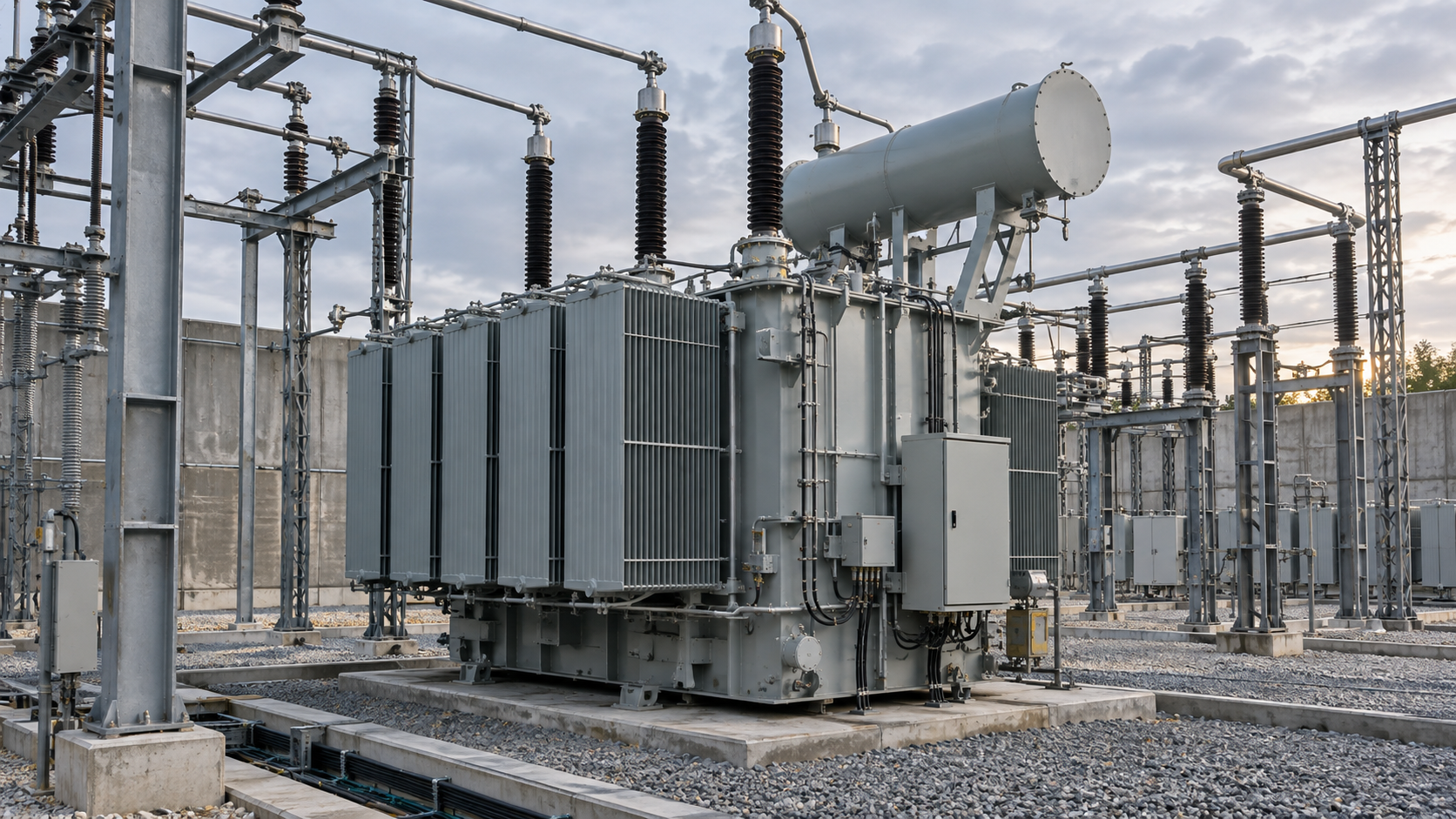
Replacing transformers that have served for several decades is becoming a visible part of substation modernization. On September 22, 2026, SSEN Transmission announced the energization of new infrastructure at its existing Beauly 132 kV substation. The project includes the replacement of three transformers dating from 1970, with the first connected to the new system when the update was published. The announcement is a useful reminder that replacement work is not simply a delivery event. It is an integration project involving old and new equipment, existing circuits, site constraints and a controlled transition.
Bardeen was not involved in the Beauly project, and the project is mentioned only as recent industry context. For overseas buyers, EPC companies, consultants and project owners planning their own replacement, the practical question is different: what information must be fixed before a manufacturer can design a transformer that fits both the electrical system and the physical site?
A request that says “replace the existing transformer with the same rating” is rarely complete. Records may be outdated, the network duty may have changed, and the old unit may not reflect the interfaces required for the next operating period. The following nine inputs can help turn a brownfield replacement into a buildable, reviewable procurement package.
1. Separate Existing-Unit Data from Future Duty
The old nameplate, drawings and test reports are an important starting point, but they should not automatically become the new specification. Begin by recording the existing transformer's rated power, voltages, frequency, vector group, impedance, tap range, cooling method, insulation levels, terminal arrangement, total mass and key dimensions. Where records conflict, identify which values have been verified on site and which remain assumptions.
Then describe the required future duty. Include forecast loading, expected operating modes, ambient conditions, altitude, planned network changes, parallel operation and any revised loss, sound or monitoring objectives. This distinction helps prevent an obsolete characteristic from being copied simply because it appears on an old document.
Bardeen can organize confirmed and unconfirmed inputs in a clarification register and use the agreed duty as the basis for a project-specific proposal. The owner or responsible system engineer should approve the network assumptions and operating cases.
2. Define Electrical Compatibility in System Terms
Voltage ratio and rated power do not establish full electrical compatibility. The inquiry should define the system's highest voltage where applicable, frequency, winding connections, neutral and earthing arrangement, insulation requirements, tap-changer type and range, available fault level, load profile and required impedance. If the new unit may operate in parallel with another transformer, the engineer should state the necessary compatibility criteria rather than asking the manufacturer to infer them.
Impedance deserves particular attention because it affects voltage regulation, fault current and load sharing. A request to duplicate the old value may be appropriate in some projects, but it should be checked against the present network and the manufacturing tolerances specified in the contract. Protection studies, load-flow studies and short-circuit calculations remain the responsibility of the appointed engineering parties.
The agreed standard also matters. IEC 60076-1 covers general requirements for power transformers, IEC 60076-3 addresses insulation levels and dielectric tests, and IEC 60076-5 addresses the ability to withstand external short-circuit effects. The exact editions, amendments, local requirements and project-specific deviations should be stated in the purchase specification.
3. Capture the Real Mechanical Envelope
Brownfield sites impose boundaries that a general catalog drawing cannot show. The RFQ package should include a verified site survey with foundation dimensions, rail or skid arrangement, anchor locations, fire-wall positions, cable-trench edges, drainage details, access clearances and the location of nearby energized equipment. Photographs are useful, but dimensioned drawings and survey data should control the design.
The buyer should also identify limits for transport mass, installation mass, oil or fluid handling, jacking points and component removal. Radiators, conservators, bushings and cable boxes may require assembly space that is not obvious from the final operating footprint. Maintenance access for valves, instruments, fans, marshalling equipment and sampling points should be reviewed before drawing approval.
Bardeen can develop a general arrangement around the confirmed limits and issue drawings for customer review. A drawing overlay between the proposed unit and the verified foundation can reveal clashes early, while changes are still manageable in engineering rather than at site.
4. Freeze Terminal Geometry and Conductor Interfaces
Terminal location is often a critical replacement constraint. Existing buswork, overhead conductors, cables or busduct may have limited adjustment. The inquiry should show phase order, terminal orientation, connection height, conductor approach direction, flexible-link allowance, cable size and quantity, bending radius, gland or sealing requirements and any enclosure boundary.
Simply requesting “same as existing” leaves too much uncertainty. The manufacturer needs controlled dimensions, and the customer needs to confirm whether the new connection will reuse existing conductors or include new interface work. External clearances, support loads and site tolerances should be coordinated by the responsible parties.
During technical clarification, Bardeen can show terminal coordinates and connection details on approval drawings. Interface comments should be resolved before production release, with revisions recorded so that the site team and factory work from the same approved geometry.
5. Map Every Auxiliary, Protection and Monitoring Signal
A replacement transformer must connect to the station's control and protection environment as well as its power circuit. Buyers should list required temperature indicators, liquid-level devices, pressure devices, cooling controls, alarms, trips, current-transformer data, tap-position signals, local control functions and communication interfaces. Each signal should have an assigned purpose and destination.
The project should also state the auxiliary AC and DC supply voltages, terminal-block conventions, cable-entry direction, spare terminal expectations, contact ratings and any separation rules for control wiring. If a station automation system is being retained, protocol and data-point requirements need early coordination. A familiar device name is not enough to confirm system compatibility.
Bardeen can incorporate agreed instruments and terminal arrangements into schematics and wiring documents, subject to product availability and internal capability confirmation. Protection philosophy, relay settings, communications integration and station-level commissioning should remain assigned to qualified project personnel.
6. Define the Changeover and Site Work Boundaries
An operating substation usually cannot be treated as an empty construction site. The procurement team should describe the intended outage sequence, removal plan, temporary operating arrangements, civil modifications and the point at which the new transformer must be ready for connection. This does not require the transformer manufacturer to control the site program, but it does allow the supply scope to support it.
Clarify which components will be shipped fitted, which will be removed for transport, who will supervise assembly, who supplies filling or processing equipment where needed, and who performs site testing. Identify whether any accessories must arrive earlier than the main unit and what storage conditions apply. The site contractor, lifting specialist and commissioning team should review these boundaries before shipment.
Bardeen can align packing lists, assembly information, document release and available technical support with the agreed division of work. Exact field-service availability, responsibilities and commercial terms must be confirmed in the contract for the destination country.
7. Turn Critical Interfaces into Manufacturing Hold Points
Once the design is approved, critical requirements need to remain visible through production. A useful inspection and test plan identifies review points for approved drawings, key material records, core-and-coil manufacturing, tank fabrication, accessory installation, wiring checks, routine tests and final release. The level of customer involvement can be scaled to the project without creating unnecessary steps.
For a replacement unit, interface dimensions deserve specific verification. The final inspection can check the approved footprint, terminal coordinates, overall transport dimensions, accessory locations and identification of separately packed items. Deviations should be managed through an agreed review process rather than discovered during installation.
Bardeen can prepare production and inspection records against the approved technical documents. The customer should specify any witness, hold or document-review requirements at RFQ stage so they can be included in the manufacturing plan and schedule.
8. Connect Factory Testing to the Specification
A factory acceptance plan is most useful when each test links to an agreed requirement. The RFQ should identify the governing standard, routine tests, requested type or special tests, acceptance criteria, witnessing arrangements and report format. Dielectric requirements, ratio and vector-group checks, winding resistance, impedance and load-loss measurements, no-load loss and current, functional checks and leak or pressure-related checks should be addressed as applicable to the selected transformer and standard.
Not every project needs every optional test. The correct plan depends on voltage class, design, customer requirements and risk assessment. Adding a test after design or production has advanced may affect cost and timing, so technical and commercial teams should agree the scope early.
Bardeen can issue a project-specific test schedule for review, carry out the agreed factory tests within its confirmed facilities or approved arrangements, and compile the results into the handover package. Any claimed capability must be checked internally for the proposed product before publication or quotation.
9. Make the Document Package Part of the Equipment
A transformer can arrive physically complete while the project still lacks the information needed to install and energize it. The RFQ should therefore include a document schedule with required submission dates. Typical items may include the approved datasheet, general arrangement, foundation loading, terminal details, control schematic, wiring diagram, accessory data, packing list, test reports, storage instructions, installation guidance and operation and maintenance information.
Use a clear revision and approval process. Mark documents as preliminary, for approval, approved for manufacture or final as appropriate to the project. Record open comments and ensure that the site receives the same final revisions used for factory release.
Bardeen can coordinate drawings, production records, test reports and shipping documents around an agreed document register. This gives procurement and engineering teams a traceable handover instead of a collection of disconnected files.
A better procurement question is not whether a new transformer can be made to look like the old one. It is whether the new unit's electrical duty, mechanical envelope, terminals, controls, test plan, documents and site responsibilities have been confirmed for the system that will actually operate.
Bardeen can support this process by reviewing customer inputs, identifying missing transformer-side data, preparing a project-specific technical proposal, developing approval drawings, coordinating customized production, applying agreed quality controls, completing the specified factory test package and preparing documents and packing for delivery. These activities should be confirmed for the selected product, rating and destination before an order is placed.
For buyers, a verified survey package, updated single-line diagram, operating cases, interface drawings, signal list, test requirements and document schedule create a stronger RFQ. They also give every party a clearer basis for technical review, commercial comparison and controlled execution.

 EN